
Overview
VibeTech Monitoring measures vibration from motors, pumps, fans, gearboxes, bearings, and other rotating or process equipment under actual operating conditions. Baseline, scheduled, and event-triggered triaxial measurements help identify changes in vibration level, frequency content, waveform behavior, and operating-state response.
The resulting evidence supports baseline condition assessment, diagnostic troubleshooting, maintenance prioritization, and scoped repeat studies before or after corrective work. Repeat programs use documented study scopes; the public website is not a live connection to customer equipment or the VibeTech operations interface.
Measurement package
- 01Velocity and acceleration measurementsStudy configured
- 02RMS trends and time waveformsStudy configured
- 03Frequency-spectrum analysisStudy configured
- 04Scheduled and event-triggered capturesStudy configured
- 05Location, axis, load, and phase comparisonsStudy configured
- 06Dominant-frequency and change summariesStudy configured
- 07High-accuracy temperature and relative-humidity trends evaluated alongside vibration condition indicators and operating stateStudy configured
- 08Raw waveform data linked to sensor, location, and collection timeStudy configured
Field examples
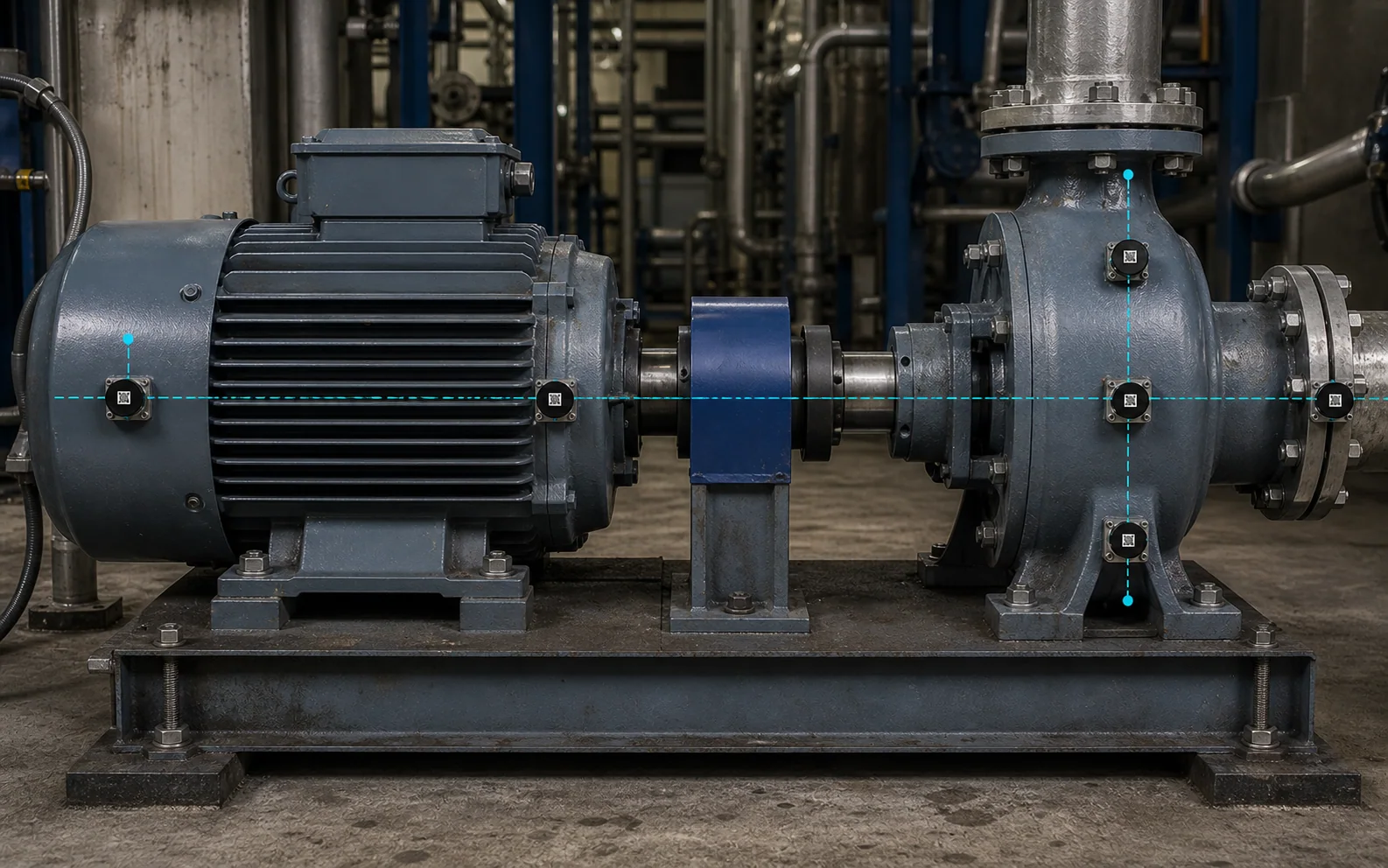
A location- and axis-specific measurement map ties every reading to the motor, pump, component, and measurement direction, creating a repeatable basis for baseline and follow-up studies.
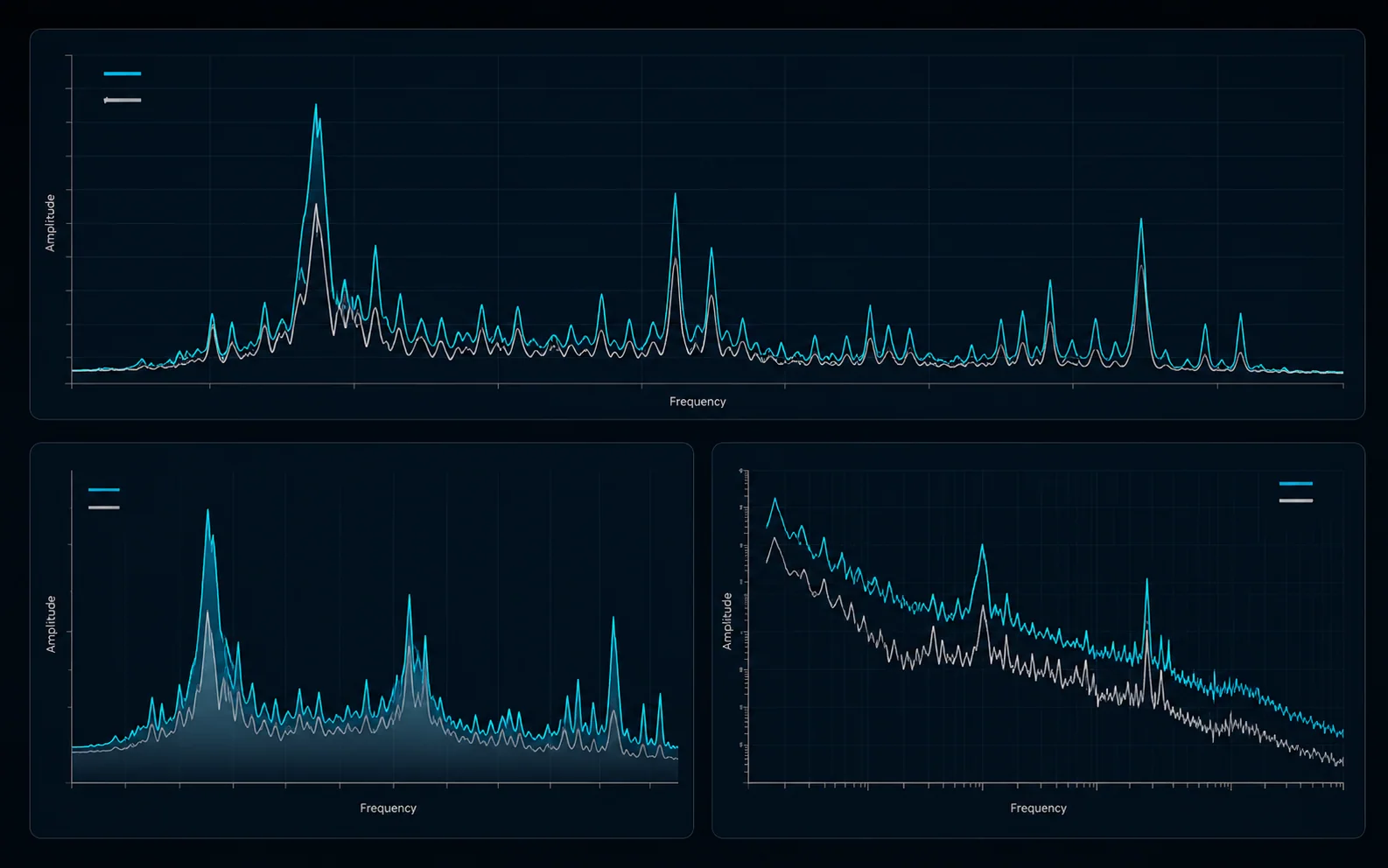
Baseline-to-current spectra make changes in running-speed components, harmonics, and broadband energy visible, helping maintenance teams focus inspection on the frequencies that actually changed.
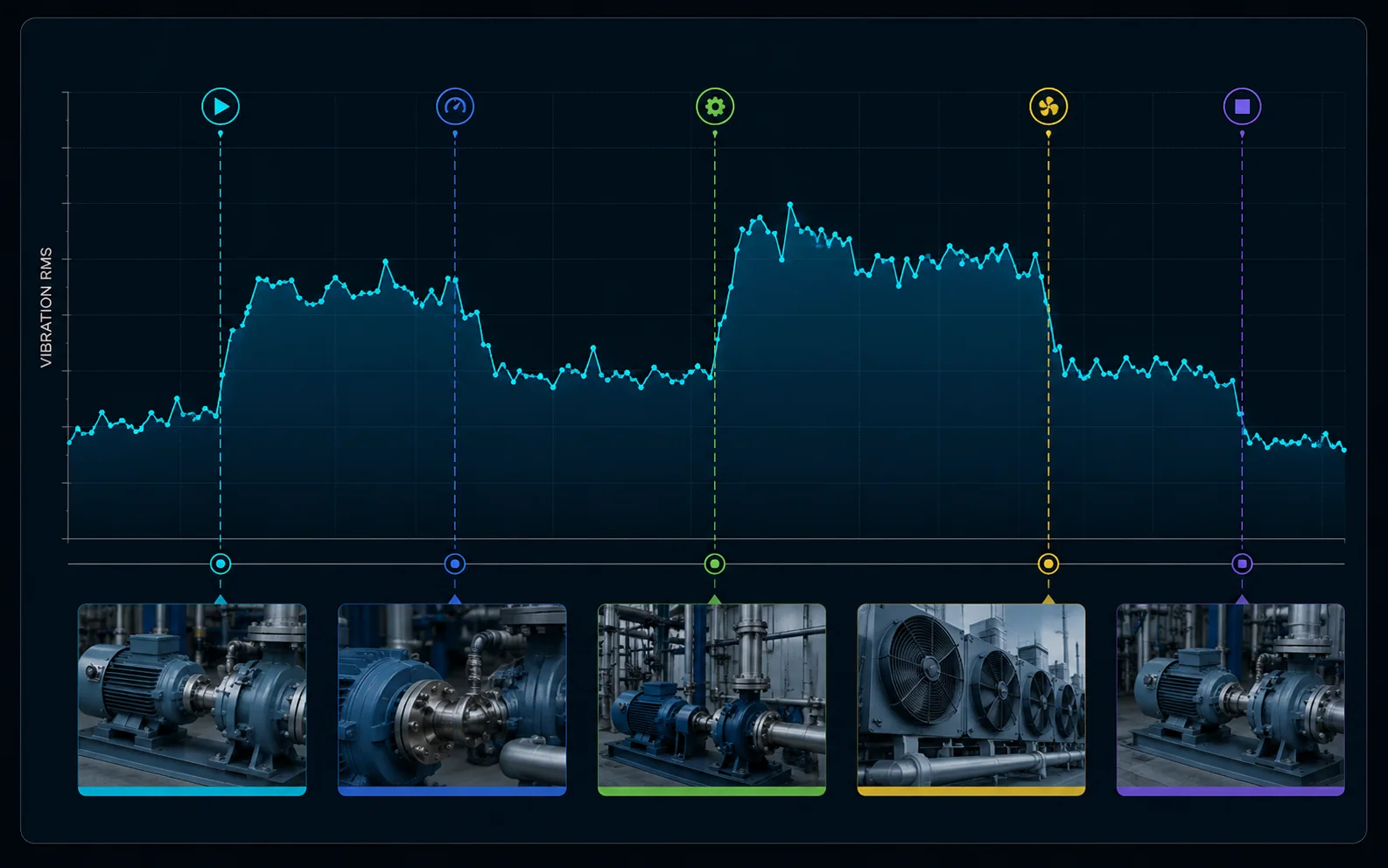
Trending RMS vibration alongside operating and maintenance events separates persistent change from normal process variation, supporting condition-based planning and verification after corrective work.
Service modes
Baseline Condition Assessment
Documents location- and axis-specific vibration under defined operating states to establish a repeatable reference.
Diagnostic Troubleshooting Study
Captures targeted time waveforms and spectra around a reported symptom, transient event, or operating condition.
Recurring Condition Monitoring
Available as a scoped repeat-measurement program built from documented baseline or diagnostic studies; it is not automatic continuous monitoring.
Post-Maintenance Verification
Available as a scoped before-and-after study that compares documented conditions around repair, alignment, balancing, or other corrective work.
Applications
What the evidence can support
Establish post-installation or maintenance baselines
Identify developing vibration changes
Prioritize inspections and maintenance activity
Compare conditions before and after corrective work
Document intermittent or transient behavior
Support predictive and condition-based maintenance
Every reported result remains linked to the sensor identity, documented location, collection time, measurement configuration, operating context, and underlying waveform data.
Scope boundary
Measured evidence, stated responsibly.
Machine-health monitoring supports maintenance planning and early investigation. It does not guarantee failure prediction, determine remaining useful life, identify every fault, or replace OEM criteria, specialized diagnostics, or engineering review.